When you are preparing for a high-stakes trade show in a fast-paced environment like New York City, every detail of your booth matters. Your banners are often the first point of contact between your brand and a potential client. They set the tone for your professionalism and the quality of your services.
The most common question our clients ask at Printleaf is: "Should I go with vinyl or fabric?"
While both materials serve the same fundamental purpose, displaying your brand, they offer drastically different benefits in terms of aesthetics, durability, and logistics. Choosing the wrong substrate can lead to unwanted glare under bright venue lights or a banner that looks wrinkled and unprofessional.
In this guide, we will break down the technical specifications and practical benefits of custom vinyl banners versus fabric banners to help you make an informed decision for your next event.
Vinyl Banners: The Industry Workhorse
Vinyl is the traditional choice for wide-format printing, and for good reason. It is rugged, cost-effective, and delivers high-impact color. At Printleaf, we typically use 13oz or 15oz scrim vinyl, which consists of a strong polyester mesh (the "scrim") embedded between two layers of PVC.
The Benefits of Vinyl
- Durability and Longevity: Vinyl is virtually tear-proof and highly resistant to water and scuffs. This makes it the ideal choice if you plan on using your banners in high-traffic areas or even for outdoor promotional events near the convention center.
- Vibrant Color Depth: Because the ink sits on the surface of the PVC, custom vinyl banners offer incredible color saturation. If your branding relies on neon-bright colors or deep, high-contrast blacks, vinyl will make them "pop" more than almost any other material.
- Cost-Effectiveness: If you need to cover a large area on a budget, vinyl is the clear winner. It is significantly less expensive to produce than fabric, especially when ordering in bulk for multiple booth locations.
- NYC Speed: For professionals looking for banner printing in NYC, vinyl is often the fastest to produce. We can often turn these around on the same day to meet tight deadlines.
The Trade-offs
The primary drawback of vinyl is its finish. Standard vinyl has a slight sheen that can cause glare under the heavy overhead lighting common in convention centers like the Javits Center. While we offer matte vinyl options to mitigate this, fabric still holds the crown for light absorption.
Fabric Banners: The Premium Aesthetic
Fabric banners, typically made from high-quality polyester, have surged in popularity for trade show booths. They are printed using a process called dye-sublimation, where the ink is heat-transferred directly into the fibers of the material rather than sitting on top.

The Benefits of Fabric
- Matte, Glare-Free Finish: Custom fabric banners are the gold standard for photography. If you are setting up a booth where people will be taking photos, or if you are under intense stage lights, fabric will not reflect any glare. This ensures your logo is always legible from every angle.
- Premium "High-End" Look: Fabric has a soft, sophisticated drape that suggests a higher level of brand quality. It looks more like a permanent piece of décor and less like a temporary sign.
- Portability and Storage: This is the game-changer for traveling exhibitors. While vinyl must be rolled carefully to avoid permanent creasing, fabric banners can be folded.
- Washable and Reusable: If your fabric banner gets a smudge during setup, you can often machine wash it on a gentle cycle. You can also use a hand steamer to remove any minor wrinkles once the banner is hung.
The Trade-offs
Fabric is generally more expensive than vinyl due to the specialized dye-sublimation process. It is also less suited for outdoor use, as the fibers can soak up moisture and dirt more easily than the wipe-clean surface of PVC.
Comparison at a Glance
| Feature |
Custom Vinyl Banners |
Custom Fabric Banners |
| Material |
13oz – 15oz PVC Scrim |
100% Polyester |
| Best For |
Outdoor, High-Traffic, Budget-Friendly |
Indoor, High-End Booths, Photography |
| Finish |
Semi-Gloss or Matte |
Ultra-Matte (No Glare) |
| Durability |
Waterproof & Scuff-Resistant |
Delicate; Best for Indoor Use |
| Storage |
Must be Rolled |
Can be Folded |
| Cleaning |
Wipe with damp cloth |
Machine washable (Gentle) |
Logistics: The Travel Factor
If you are a marketing manager flying across the country for a series of shows, logistics should be a major part of your decision.

Vinyl banners are heavy and must be shipped in long tubes to prevent the material from "tunneling" or developing permanent white crease marks. In contrast, a 10-foot fabric backdrop can be folded into the size of a sweater and tucked into your carry-on luggage. This can save you hundreds of dollars in drayage and shipping fees over the course of a trade show season.
Hardware and Display Options
Your choice of material often dictates the hardware you should use.
Retractable Banner Stands
For retractable banner stands and same-day retractable banners, both vinyl and fabric-style setups can work well depending on your display goals and venue setup. The key detail for Printleaf retractable banners is simple: we print them on smooth vinyl, which delivers a clean, professional finish that rolls into the stand reliably for fast setup and repeat use.

Backdrops and Media Walls
For backdrops and media walls, tension fabric displays are the premium choice. The fabric graphic stretches over a frame to create a smooth, seamless presentation with a polished, high-end look that photographs beautifully and minimizes glare. This makes tension fabric displays a strong fit for branded photo ops, press walls, trade show booths, and corporate events where perceived value matters.

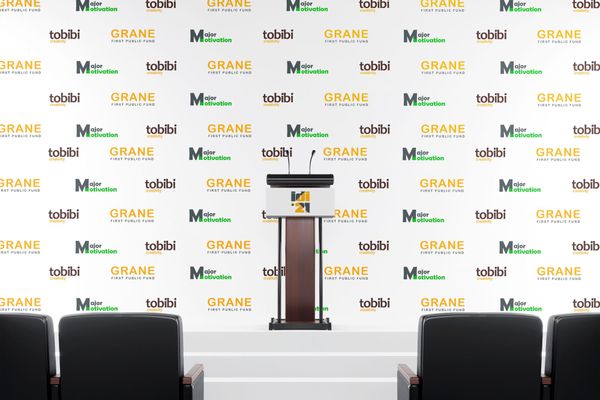
Pro-tip: If you are designing a step-and-repeat backdrop, we recommend our AI Step and Repeat Designer to help you lay out your logos before printing on a premium tension fabric display.
Frequently Asked Questions
Which banner is better for outdoor use?
Vinyl is significantly better for outdoors. It is waterproof, UV-resistant, and can withstand wind better than fabric, which acts like a sail and can fray over time.
How do I get wrinkles out of my banners?
For fabric, use a handheld steamer on the back of the material. For vinyl, lay it flat in the sun for an hour, or carefully use a blow dryer on a low heat setting to relax the material, but be careful not to melt the PVC!
Can I use fabric for a retractable banner?
Yes, but you must ensure it is a "tension fabric" designed for stands. At Printleaf, we offer specific fabric options for our premium retractable stands to prevent edge curling.
The Verdict: Which Should You Choose?
Choose Vinyl if:
- You are on a tight budget.
- You need the banners turned around in 24 hours or less in NYC.
- The display will be used outdoors or in a very high-traffic area.
- You want the absolute brightest, most saturated colors possible.
Choose Fabric if:
- You want a premium, high-end look for a corporate event.
- The booth will be heavily photographed (to avoid glare).
- You are traveling by plane and need to pack your graphics in a suitcase.
- You want a seamless, large-format backdrop, especially with a tension fabric display.
At Printleaf, we specialize in helping brands navigate these choices to ensure their presence is felt at every event. Whether you need a single retractable stand or a full-scale custom booth, our team is here to ensure your vision is printed to perfection.
Ready to start your project? Browse our banners, tension fabric displays, table cloths, and retractable banners — or contact us today for a custom quote.
Last modified: July 17, 2026
